Employee Interview
The Role of the Principal: Requirements and Responsibilities
Denis talks about his career and his wide-ranging responsibilities as a principal.
07.05.2025
Lena Hocker
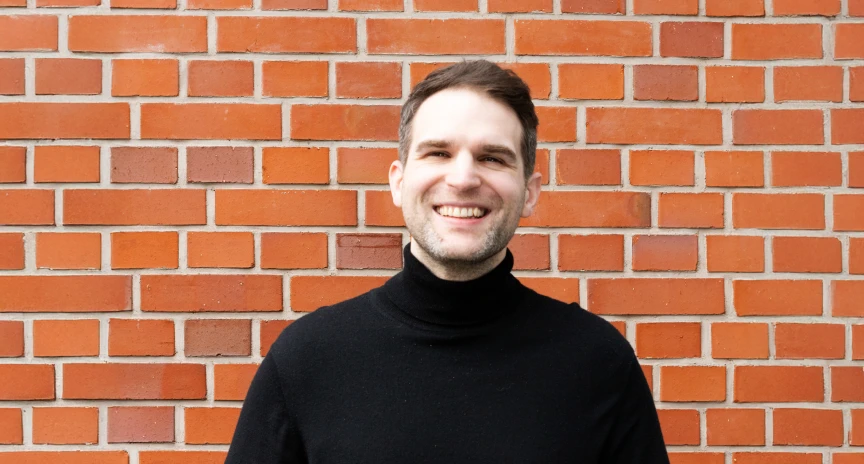
Denis Dolovac, who has been part of the torq.partners team for over three years, offers fascinating insights in this interview into his diverse range of responsibilities as a Principal and explains what qualities are necessary to successfully fulfill this role. He also shares his impressions of the company’s development since its inception and discusses how his own career has unfolded during this time.
What is your position at torq.partners, and what does it entail?
I am a Principal and handle both complex finance projects for our clients and the management of project teams. In other words, when a senior management position needs to be filled, I step in. My responsibilities include, among other things, carrying out post-merger integrations—that is, integrating acquired companies into existing structures. In addition, I lead financial due diligence processes, for example, which are conducted by investors prior to an acquisition. Due diligence helps identify potential risks that could be relevant to the buyer during the acquisition process. Internally, I support the professional development of my colleagues. I assess where they currently stand in their career paths and how I can help them achieve their professional goals. I’m also involved in an area focused on creating internal structures. This includes, for example, establishing standardized processes or identifying suitable tools, including communicating with their providers. Overall, I would say that while I frequently work on client projects, I also have a great deal of creative freedom for internal projects.
Is there a specific area of responsibility that you particularly enjoy?
What I enjoy most is guiding and supporting my employees as they grow. I like that you can clearly see their progress over time. Some of my colleagues on the team started with us two years ago and are now at a similar level to me; they’ve successfully completed major projects or specialized in areas that are very helpful to the entire team. It makes me very happy to see that.
What aspects of your work present challenges for you?
The challenge is that you’re often deadline-driven. As a father, this makes it difficult for me to balance my professional and personal life. For example, there are days when I’d love to have dinner with my family, but at the same time I know I actually need that time to finish a project. So I’d say that the day-to-day life of a consultant can be both a blessing and a curse. On the one hand, the job is varied; you’re constantly learning and gaining new experiences from every project. On the other hand, it can be very stressful, especially when things need to be finished quickly.
What field were you working in before joining torq.partners, and why did you decide to make the switch?
Before that, I worked in auditing at one of the Big Four firms and was quite happy there. At some point, one of the managing partners at torq.partners—whom I knew from a previous job as a working student—contacted me. He told me he was in the process of building something new and was still looking for employees. Even though I wasn’t actually looking for another job, I was drawn to the prospect of taking on more responsibility here. While I had to report up the chain a lot in my previous role, the position at torq.partners offered me the opportunity to be a driving force myself and make a bigger impact. That’s why I ultimately decided to make the move.
In your opinion, in what areas do you think torq.partners has made the most progress since you started?
Above all, our way of working has evolved. Today, we are more structured and professional, have standardized many processes, and have learned from the challenges we’ve faced. As a result, we now deliver even higher-quality services. We’ve also become more resilient as an organization. In the past, it was problematic when someone was absent, since various tasks and areas were heavily tied to specific individuals. Today, we have a broader skill set and have found effective ways to share our knowledge with one another.
How has your own career progressed at torq.partners?
From the very beginning, I served as a Principal at torq.partners. Because of my previous job at a larger company, I was used to seeing things from a corporate perspective, so the transition to the startup world was a big adjustment for me at first. I had to get used to the structures and ways of working at torq.partners and develop a feel for our clients. While much was formalized in my previous professional environment, here I was given the trust to take the initiative on my own. Right from the start, I took over leadership of a team—something I had previously only done at the project level. From that point on, my role also involved technical and disciplinary leadership, which was definitely a step forward in my professional development. The creative freedom and close collaboration with the managing partners were also new to me. Little by little, I’ve grown stronger in various areas, especially in entrepreneurial thinking and leading employees. I’ve also learned to take on more responsibility. In my projects at torq.partners—unlike before—I’m the final decision-maker and, accordingly, responsible for the results delivered to the client.
Are there any areas where you'd like to further develop your career in the future?
Yes, in the future, I’d like to scale back my hands-on work—that is, working directly with clients—a bit and get more involved in shaping the vision for torq.partners. For me, that means no longer just ensuring that day-to-day operations run smoothly, but also playing an active role in the strategic side of things. This includes defining the direction in which we want to move and determining the steps needed to get there.
In your opinion, what are the qualities that are most important for your role, and why?
As a principal, you have to be versatile above all else, since you have to deal with complex issues and sometimes think outside the box. It’s also important to be able to assess the impact of your actions: If I do something in one area, what does that mean for other areas? This requires good intuition and a certain amount of experience. In addition, you have to be self-reliant. Both internally and with clients, you’re expected to take responsibility, solve problems on your own, and proactively drive things forward.
Good communication skills are also essential. It’s important to be able to openly address even difficult topics within the team—for example, when something has gone wrong on a project, or whenan employeefeels ready to move into the next role but, from a leadership perspective, there are still some areas that need improvement. This also applies when dealing with customers, as problems can sometimes arise there as well—for example, if they’re dissatisfied with a service. In such cases, it’s important to identify what went wrong, resolve the situation, and ensure that the customer continues to feel comfortable working with us.
Where do you usually work from?
I live in Berlin, so I’m close to our office, but I’m still very grateful that we work on a “remote-first” basis. I go into the office every now and then, but for me, working from home has significantly more advantages. For one thing, it makes it easier to organize my daily family life. I drop my kids off at daycare in the morning and can still be at my laptop on time at nine o’clock. I also save on commute time in the evenings. For one thing, I enjoy the peace and quiet of working from home. Unlike at the office, there are few distractions, so I can focus better on my tasks. I have to say that I hardly know any other company that lives by the “remote-first” principle as consistently as we do. For me, this is a real game-changer, and I’d find it hard to go back to commuting to the office several days a week.
Do you have any routines or habits that help you stay productive while working from home?
I don’t really have a set routine, but I always try to take my lunch break at noon. What else helps me are internal meetings. Especially since you’re often working on projects by yourself, it’s easy to lose touch with your colleagues. That’s why it’s important to check in regularly. In my team, for example, we have a daily meeting to discuss our current workload and project assignments. If that’s wrapped up quickly, we like to use the time for a brief chat about topics unrelated to work. In a group that came together as part of a development program, we meet regularly without an agenda to catch each other up or talk about challenges. It really helps to know that you’re not alone in dealing with certain phases or problems. Conversations like these make it easier to get through even the most stressful times.
Which of our team events do you remember best, and why?
I especially remember our 2023 company offsite. It was the first time that almost everyone at torq.partners came together in one place—not just the Finance department, but also colleagues from People Consulting, the Benelux team, and internal departments with whom we otherwise only interact on an irregular basis. One highlight for me was a group soccer game, where the originally planned 20 minutes of play quickly turned into two hours. I also really enjoyed a group dinner under the open sky at a long table. Another event I fondly remember is the first one with my own team. We went bowling and then out to eat together. Seeing how the team I helped build gets along, celebrates, and looks back on our journey together was really wonderful and made me feel a little proud, too.
What makes torq.partners special to you?
For me, what sets torq.partners apart above all is its open communication. It starts with the fact that the company’s financial figures are regularly shared at all-hands meetings, salary ranges are communicated transparently, and challenges—even at the executive level—aren’t swept under the rug. This openness is exemplified by the partners and runs through every level of the organization. This creates an environment in which, for example, even junior colleagues feel confident enough to openly address difficulties without worrying about being judged for it. I also want to promote this approach in my role. After all, it’s only by openly addressing weaknesses or problems that we can actively move things forward. Hiding them doesn’t help anyone. On the contrary: Either they’ll come to light later, or they’ll weigh so heavily on the person affected that, in the worst-case scenario, they might leave the company.
Another thing I appreciate is the way we handle change. Decisions are communicated to everyone in a transparent manner and are often discussed and agreed upon in advance during a larger meeting. Once a decision has been made, there’s still an opportunity afterward to express your opinion on it. You feel like your voice is truly being heard. Another aspect that makes torq.partners special to me is how we look out for one another. For example, we have a metric we use to assess employees’ workload, and we actively check in at regular intervals to see if colleagues need support. This has allowed us to find an effective way to address burnout early on. It’s truly important to us that everyone on the team is doing well. You can really feel that in our day-to-day work.
Contents
Interim Support
Does your finance team need help?
Book a no-obligation initial consultation now.
Schedule a call
free download
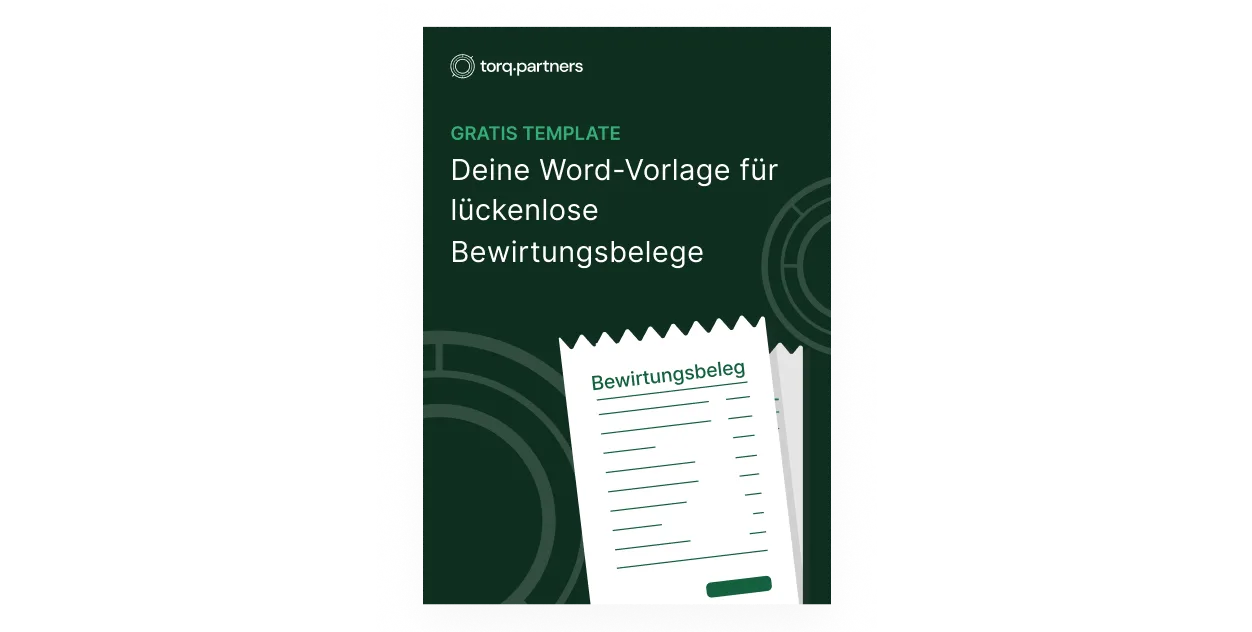
Systematically record entertainment expense receipts
Only complete entertainment expense receipts can be accepted by the tax office. Our template provides you with a comprehensive list of all required items.
To Download →
podcast
Finance Careers, Networking, and Visibility with Aylin Schaer
Careers in finance, self-employment, networking, and visibility in the Female Finance Circle.
Listen on Spotify →